
One in Five New Cars Sold in Australia Is Now Electric
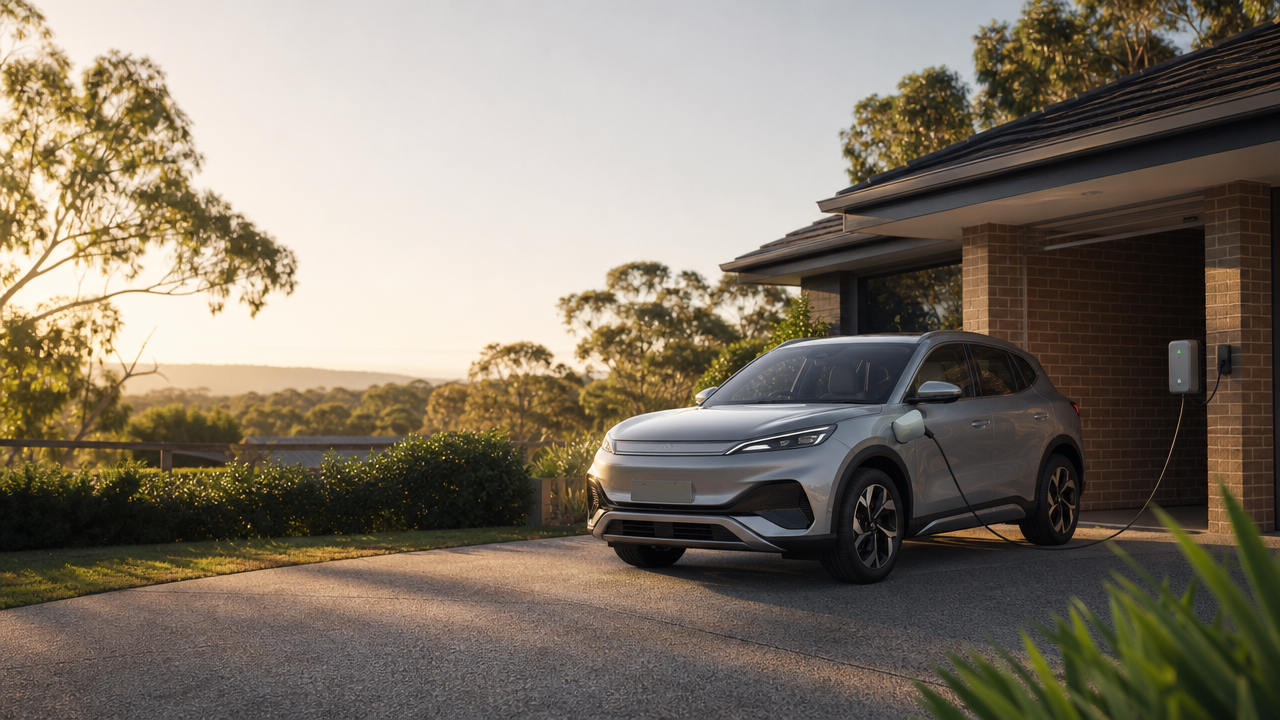
For most of the last decade, Australian electric vehicle coverage came with an asterisk. Sales were growing, yes, but from a very small base, in a country that was consistently described as a laggard. That framing is now out of date.
In July 2026, Australians took delivery of 103,656 new vehicles — the strongest July on record, beating the previous best set the year before. Of those, 23,510 were battery-electric: 21.7 per cent of the entire market. It was the second month in a row that BEVs cleared one in five, and it followed a record-breaking June in which the market as a whole posted its biggest month ever recorded.
Year to date, 127,244 battery-electric vehicles have been sold, or 17.3 per cent of the market. In January, EV share sat in single digits. That is a remarkably fast shift for a market that is usually described as slow.
The interesting part isn't Tesla
The old story about EVs in Australia was a story about one brand. That's no longer true either.
Toyota was still the country's top-selling marque in July with 20,409 deliveries, but BYD came second on 7,857, ahead of Ford, Kia and Mazda. On EVs specifically, BYD outsold Tesla for the fifth month out of seven this year — 5,116 to 4,778 — and leads on year-to-date volume. The Tesla Model Y still finished third overall on the model chart behind the RAV4 and the HiLux, which tells its own story about what Australians actually buy, but the names filling out the EV top ten now include the BYD Sealion 7, the Geely EX5 and the Zeekr 7X. Choice, more than any single model, is what changed.
The industry's own warning sits alongside the good news. FCAI chief executive Tony Weber flagged the obvious risk: uptake is running ahead of public charging infrastructure, particularly in regional areas and for drivers without a home charger. Enthusiasm has outpaced kerbside reality before, and it's a fair thing to watch.
What this quietly does to your records
Here's the part that matters if you drive for work, run a small fleet, or are simply one of the many people who bought an EV this year and hasn't thought about tax yet.
The cents-per-kilometre method doesn't care what's under the bonnet. For 2026–27, the rate is 91 cents per kilometre, capped at 5,000 business kilometres per car. It applies to petrol, diesel, hybrid and electric vehicles identically. The rate is designed to cover all running costs — fuel or electricity, servicing, depreciation, insurance — in one number.
But the logbook method can be worth more, and EVs are exactly where that gap shows up. If your work-related use is a high percentage of your total driving, claiming actual expenses on your business-use percentage will often beat a capped 5,000 km. That requires a valid 12-week logbook and your odometer readings at the start and end of the year — the same paperwork it has always required.
Home charging finally has a shortcut rate. Under the ATO's Practical Compliance Guideline PCG 2024/2, the EV home charging rate rose to 5.47 cents per kilometre for the FBT year beginning 1 April 2026, up from 4.20 cents. It's a way of estimating the electricity cost of charging at home without separately metering the charger — which is otherwise a genuinely awkward thing to prove.
Notice what every one of those depends on. Not the car. The kilometres. An EV removes the fuel receipt from your life, which is lovely right up until the point where you realise the fuel receipt was doing quiet double duty as a record that the trip happened at all. Electric drivers have fewer natural paper trails, not more.
Which makes the odometer the whole ballgame. Opening reading, closing reading, and a record of the trips in between. That's the substantiation, whether the car burns diesel or charges overnight in the carport. An app like Odomly logs the odometer and the trip automatically as you drive, so the record exists without anyone having to remember to create it — which is roughly the point.
The takeaway
One in five is a real milestone, and it happened faster than almost anyone forecast. If you're one of the 127,000 Australians who bought an EV this year: enjoy it, plan your regional trips around chargers for now, and start your logbook before you've forgotten what your odometer read on the day you drove it home.
Sources: FCAI, "EV sales remain strong during record-best July" (5 August 2026); FCAI VFACTS July 2026; The Driven, "EVs take 21.7 pct of new car market in July" (5 August 2026); ATO, Cents per kilometre method (2026–27); ATO, Practical Compliance Guideline PCG 2024/2 — Electric vehicle home charging rate.